Lagos State has continued to walk a tight line between rising public spending and what officials describe as a stable debt position, even as its revenue base expands at a record pace.
Across Nigeria’s commercial capital, fiscal conversations rarely stay quiet for long. Infrastructure projects, population pressure, and rising demand for public services keep the state’s finances constantly under scrutiny.
Now, the government says its latest numbers show continued strength in both revenue generation and debt management.
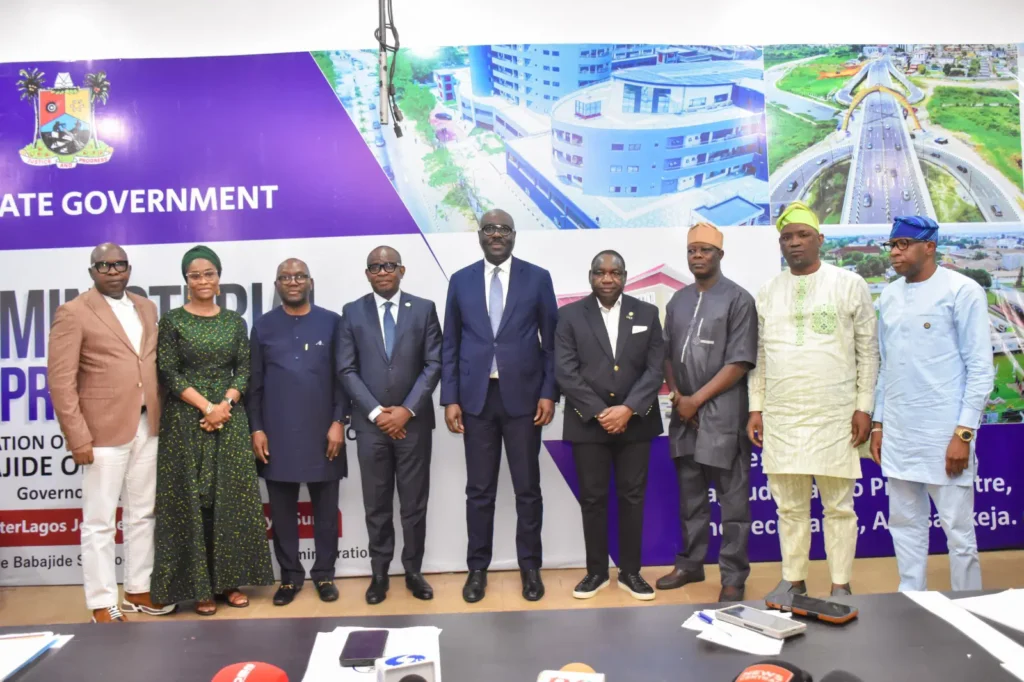
The Lagos State Government has announced that it generated N2.6 trillion in total revenue in 2025, while still maintaining what it called a stable and sustainable debt profile, according to the Commissioner for Finance.
The figure represents another jump in the state’s internally generated revenue, which officials say has been driven largely by improved tax administration, digital payment systems, and broader compliance efforts across formal and informal sectors.
“We have maintained a stable debt profile while expanding our revenue base significantly,” the commissioner said, pointing to stronger fiscal coordination within government agencies.
The announcement comes at a time when Lagos continues to depend heavily on internal revenue rather than federal allocations to fund its expanding urban infrastructure.
From road construction to healthcare upgrades and transport reforms, the state’s spending commitments have grown alongside its population and economic activity.
Still, officials insist the debt situation remains within manageable limits, arguing that revenue growth has helped balance borrowing needs.
In previous disclosures, the state has consistently maintained that its debt-service-to-revenue ratio remains below cautionary thresholds, a metric often used to assess fiscal sustainability. (thecable.ng)
The latest revenue performance also reflects Lagos’ continued push toward digital tax collection systems.
Electronic payment platforms, automated tax filing, and expanded use of fintech channels have all contributed to improved efficiency in revenue collection, according to government officials.
A significant portion of the state’s income continues to come from taxes, levies, and fees collected through the Lagos State Internal Revenue Service, which has been undergoing steady digital transformation in recent years.
But the fiscal story is not only about revenue growth.
It also sits within a broader debate about how Nigerian states manage debt exposure while trying to fund infrastructure-heavy development agendas.
Lagos, as Nigeria’s most populous and economically active state, often serves as a benchmark for subnational fiscal performance.
The state’s ability to generate high revenue internally has long been cited as a key factor in its relative financial stability compared to other regions.
“Sustainable revenue growth is what allows us to keep investing in critical infrastructure without overstretching debt,” a government source explained.
Still, analysts often note that even strong revenue figures must be viewed alongside rising expenditure pressures, particularly in a city where urbanisation continues to accelerate.
Transport expansion, housing demand, environmental management, and social services all place constant pressure on state finances.
For residents, the impact of these fiscal decisions is often felt more in infrastructure delivery than in headline revenue numbers.
Road projects, public transport upgrades, and environmental initiatives remain some of the most visible outcomes of government spending, even as discussions around debt sustainability continue in policy circles.
The state government says its focus remains on balancing development needs with financial discipline.
For now, Lagos continues to present itself as a case study in aggressive revenue generation paired with controlled borrowing, a model many other states are watching closely as fiscal pressures rise nationwide.
Whether that balance holds in the long term will depend not only on revenue growth, but also on how efficiently the state manages the costs of its expanding urban ambitions.