Healthcare infrastructure in many parts of Nigeria often carries a long history of neglect, where once-functional hospitals slowly fade into deteriorated structures before being brought back into public conversation through new government interventions.
In Abia State, that cycle is now being revisited with a fresh reconstruction effort targeting one of its long-standing public health facilities. The Abia State Government has officially begun the reconstruction of the 100-bed General Hospital in Okpuala Ngwa, located in Isiala Ngwa North Local Government Area, marking a renewed push to restore healthcare delivery in the region.
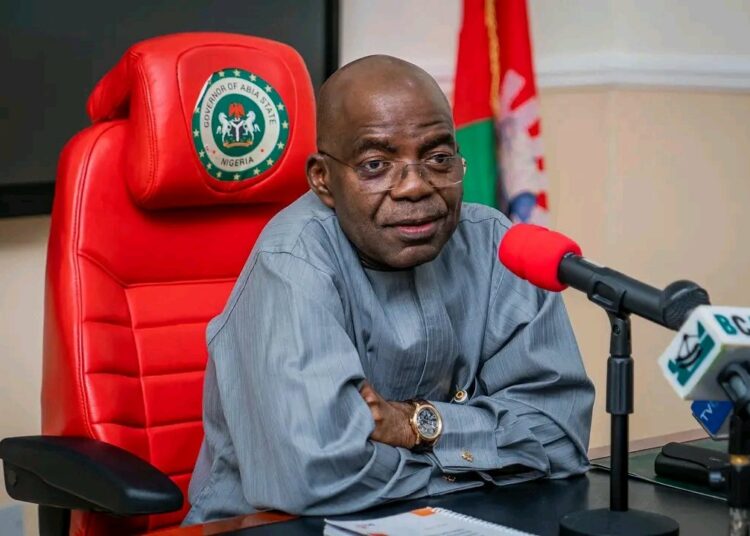
Governor Alex Otti performed the groundbreaking ceremony, describing the hospital as one with historical importance to the people of the old Eastern Ngwa axis and the wider Abia community. He noted that the facility had once served as a major healthcare centre before it gradually declined over time.
There is a familiar tone in how the governor framed the project, balancing reflection on the past with criticism of long-term neglect. “In the olden days, this used to be a major hospital in the whole of Abia and the then Eastern Ngwa area,” Otti said during the event.
The reconstruction is positioned as part of a broader effort by the current administration to rebuild the state’s health system, with emphasis on upgrading general hospitals across different local government areas.
Officials say the Okpuala Ngwa facility is being prioritised because of its strategic location and the population it serves, which includes surrounding rural communities that often depend on limited healthcare access points. The government also disclosed that other hospitals in Arochukwu and Obingwa have already been completed, while additional health facilities remain under construction across the state.
Inside the project scope, the rebuilt hospital is expected to feature modern medical infrastructure, including surgical wards, maternity units, diagnostic laboratories, emergency services, and radiology equipment designed to improve service delivery.
A state health official said the broader plan is to ensure that each local government area has functional secondary healthcare facilities capable of handling both routine and emergency cases. “This is to ensure that every LGA will have a general hospital to serve the healthcare needs of the people,” the Commissioner for Health said.
The reconstruction effort also includes land recovery actions around the hospital site, with the government claiming that portions of the facility’s land had previously been encroached upon and are now being reclaimed for development.
That detail adds another layer to the project, highlighting how infrastructure renewal in Nigeria often goes beyond physical rebuilding to include legal and administrative recovery of public assets.
In many communities, abandoned hospitals have become symbols of wider systemic issues, including funding gaps, maintenance failures, and shifting policy priorities over time. The Okpuala Ngwa project fits into that broader national pattern where revitalisation often begins years after deterioration has already set in.
Residents in the area are expected to benefit from improved access to healthcare services once the project is completed, particularly in maternal care, emergency treatment, and basic surgical procedures that previously required long-distance travel.
Still, timelines and execution pace remain key points of public interest, as similar projects in the past have sometimes stretched beyond initial expectations.
For now, the reconstruction signals intent from the state government to reposition healthcare delivery as a central development priority, especially in rural and semi-urban communities that have historically carried the burden of limited infrastructure.
And as work begins on the old hospital site, attention now shifts to how quickly the vision of a modern 100-bed facility can move from announcement into full delivery, in a system where promises and completion often do not move at the same speed.