NAGGW Partners with FAO to Launch Climate‑Resilience Project & Expand Land Restoration in Northern Nigeria
Abuja & Northern Nigeria — The National Agency for the Great Green Wall (NAGGW) — the federal government agency charged with driving land restoration, climate adaptation, food security and poverty reduction across Nigeria’s dryland frontline states — has taken important strides over the last month by collaborating with international partners to launch and implement a transformational climate‑resilience initiative that supports land restoration, sustainable livelihoods and green growth.
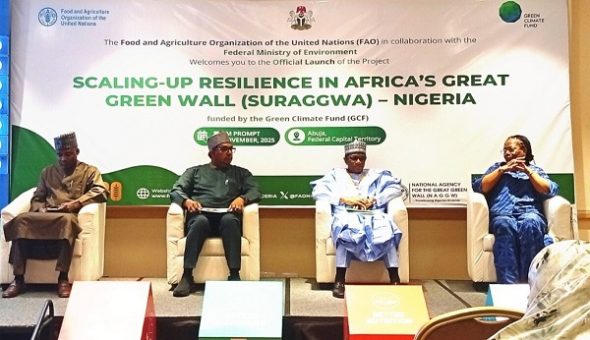
SURAGGWA Project Launched to Restore Degraded Lands and Support Inclusive Growth
In a major development, the Scaling‑Up Resilience in Africa’s Great Green Wall (SURAGGWA) project was officially launched in Abuja in November 2025, with implementation extending into early 2026 — reflecting current momentum in coordinated action. The initiative is led by the Food and Agriculture Organization (FAO) in partnership with NAGGW, the National Council on Climate Change (NCCC), and other allied programmes across the Sahel.
The SURAGGWA project — supported by the Green Climate Fund (GCF) — aims to:
- Restore degraded ecosystems and increase climate resilience through climate‑smart land and water management.
- Promote sustainable, climate‑smart agriculture and improved rural livelihoods, especially for women and youth across Nigeria’s frontline states.
- Build institutional capacity and community‑based action that anchors sustainable development and inclusive green growth.
By enhancing ecosystem services and empowering local communities, the project expects to benefit millions of people across Africa’s drylands and help reverse the impacts of land degradation — a pressing climate and economic issue.
NAGGW Director‑General Saleh Abubakar acknowledged FAO’s role in aligning the initiative with Nigeria’s renewed hope agenda and emphasised the agency’s commitment to field‑level support, community nurseries, youth and women empowerment programmes, and climate‑smart livelihood options that foster long‑term resilience.
Expanded Restoration Goals in Northern States & Community Engagement
As part of its ongoing efforts, NAGGW has elaborated ambitious restoration goals — including the 50 million date palm project aimed at combating desertification and generating economic opportunity across 11 frontline states of northern Nigeria. Under this initiative, at least five million date palm seedlings have already been distributed to farmers and communities, with potential to significantly boost rural incomes and land productivity.
The date palm strategy not only aids ecosystem rehabilitation but also aligns with economic empowerment priorities by providing a climate‑smart crop with strong commercial prospects for rural households when matured.
Why These Developments Matter for Nigeria
Climate Resilience & Land Restoration: Initiatives like SURAGGWA show how international partnerships and local leadership can help restore degraded lands, improve water retention, and expand climate adaptation services that protect food systems and environments.
Inclusive Growth & Livelihoods: Programs targeting youth and women empower local communities to derive direct economic benefit from climate‑smart agriculture and green value chains — contributing to poverty reduction.
Strengthened Agency Mandate: NAGGW continues to build institutional capacity, strengthen partnerships and scale interventions that directly support the Great Green Wall vision: halting land degradation, safeguarding biodiversity and boosting sustainable development for frontline states.