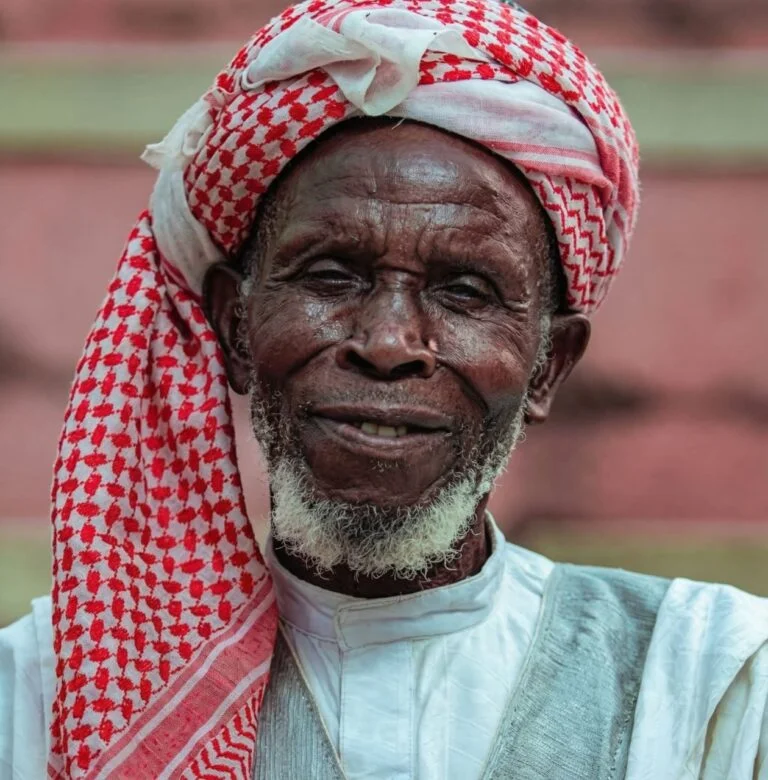
When violence tore through Plateau State in June 2018, one elderly cleric chose to protect strangers at the risk of his own life. Imam Abdullahi Abubakar, the Chief Imam of Nghar village in Barkin Ladi Local Government Area, did not found a company or run a large charity. His contribution was a single act of courage, and a lifetime of outreach behind it, that has become a lasting example of interfaith peace in Nigeria.
The Day That Defined a Legacy: June 23, 2018
On June 23, 2018, armed attackers struck communities across Barkin Ladi. People fleeing the violence ran to the imam’s mosque and home. He hid at least 300 Christians in his mosque and refused to hand them over to those seeking to harm them. Reported figures vary by source, with 200, 262 and 300 all in circulation. The figure most often cited by officials and civic groups is 262. Those he sheltered came from violence engulfing 10 villages in the area.
He did more than hide people. He and another man went outside to plead with the attackers to spare the lives of those inside, and he mobilised local youths to help guard the people taking refuge. Afterwards he explained his reasoning simply: he said saving lives was a moral duty he upheld regardless of religious differences, guided by compassion and respect for humanity.
A survivor, Mrs Tabita David, later credited the imam with saving her life and that of her family.
Recognition at Home and Abroad
His actions earned him honours from several institutions:
- Ambassador’s Peacemaker Award for Heroism. U.S. Ambassador Stuart Symington presented it at an interfaith dialogue in Abuja.
- Nigerian Young Professionals Forum award (November 2018). He received this award in November 2018.
- 2019 International Religious Freedom Award. He was one of five honourees, alongside leaders from Sudan, Iraq, Brazil and Cyprus, at the first-ever ceremony. The State Department said he “selflessly risked his own life to save members of another religious community.” President Buhari and Vice-President Osinbajo thanked him afterwards.
- A national honour in 2022. Then-President Muhammadu Buhari gave him a national honour and commended his bravery.
The U.S. citation also pointed to more than one day of courage: it described “his history of outreach across religious divides” as a lifelong commitment to interfaith understanding. That detail matters. The 2018 rescue grew out of relationships he had built over many years.
What His Work Meant for Individuals and Communities
For individuals. Hundreds of people, and by extension their families, survived because of his decision. The human value of that is hard to measure.
For communities. In a region marked by repeated communal conflict, his example gave leaders from both faiths a shared story to point to. Governor Caleb Mutfwang called him a symbol of peace, unity and selfless leadership, and the Northern Governors’ Forum said he shielded people at great risk. The Christian Association of Nigeria described him as a symbol of courage and shared humanity. Peace-building is itself an economic good, since farmers, traders and schools can only function where people feel safe.
For religious leadership. The U.S. Mission described him as a fearless advocate for religious tolerance and an example of how religious leaders can serve as bridges between divided communities.
His Passing
The Imam died on January 15, 2026. His son, Saleh Abubakar, said he died at Plateau Specialist Hospital in Jos, ten days after being admitted with a heart problem. Age is reported variously as 90 or 92. He was buried after Friday prayers in Nghar village.
Tributes came from across the country. President Bola Tinubu expressed sorrow at his passing, and the Plateau chapter of the Miyetti Allah Cattle Breeders Association described his death as a significant loss to the Muslim community. Months later, the U.S. Mission remembered him in its “This Week in US-Nigeria History” series.
Lessons from His Life
- Courage is local. He was a village imam, not a head of state, and he changed hundreds of lives.
- Relationships come before crises. His outreach across faith lines over many years made his 2018 decision possible.
- Shared humanity can outweigh division. In a moment when “tribal and religious tendencies seemed to overwhelm reason,” as President Tinubu put it, he stood on the side of life.
Conclusion
Imam Abdullahi Abubakar left no business empire or foundation. He left a moral example: that faith leaders can protect people of other faiths, and that one decision can change many lives. Honouring him means continuing the work he modelled, which is building trust across communities before conflict begins.