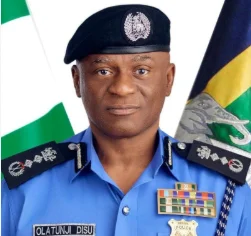
Security is a hidden input to every industry. Traders open shops, investors commit capital and ordinary people go about their lives only when they trust that crime will be met with a credible response. That makes the leadership of the Nigeria Police Force a matter for the whole economy. This post looks at the programs and initiatives of Inspector-General of Police Olatunji Rilwan Disu, from his earlier commands to his reforms in the top job, and at what they could mean for businesses and individuals.
Background: A Career Officer
He was born on April 13, 1966, in Lagos Island, and enlisted in the Nigeria Police Force on May 18, 1992. He holds a degree in English Education from Lagos State University, plus master’s degrees in Public Administration and in Criminology, Security and Legal Psychology. His training includes an Advanced Diploma in Forensic Investigation and Criminal Intelligence from the University of Lagos.
His postings cover investigation, intelligence and tactical command. They include Officer in Charge of Anti-Fraud at the Katsina State CID, SARS and anti-kidnapping commands in several states, Commander of the Lagos Rapid Response Squad (2015-2021), head of the Intelligence Response Team, Commissioner of Police in Rivers State and in the FCT, and AIG at the FCID Annex, Alagbon, Lagos. In 2005 he led the first-ever Nigerian Police contingent to the African Union Mission in Sudan.
Earlier Impact: Lagos Rapid Response Squad (2015-2021)
His best-known earlier role was leading the Lagos Rapid Response Squad. Reporting describes these changes under his command:
- Data-led patrols. He introduced crime mapping, hotspot policing and first-aid training for officers, ensuring visible patrols and proactive support for citizens.
- A service culture. The unit was rebranded as “The Good Guys,” emphasizing professionalism, public service and community trust.
- Emergency skills with public partners. The Lagos State Government trained about 380 RRS operatives in emergency response, accident scene safety, bleeding control and CPR, and donated 150 first aid kits, because the squad is often first to emergency scenes. The Lagos Security Trust Fund also backed a seven-day first-aid workshop, urging officers to see themselves as essential service providers. This is an example of the public-private funding model that supports Lagos policing.
- Protecting a commercial hub. He personally led operations at Computer Village, Lagos’s ICT market, to arrest dealers of stolen phones, leading to arrests of armed robbers and pickpockets. Cleaner markets help legitimate traders.
- Humanitarian gesture in 2020. During the EndSARS protests, it was reported that he released his command’s ambulances to help protesters in need of medical care.
- Recognition. He was named the most outstanding police operational officer in West Africa in 2016.
Taking the Top Job (2026)
He assumed duty as the 23rd indigenous Inspector-General of Police, succeeding Kayode Egbetokun, who served from June 19, 2023 to February 24, 2026. He was officially sworn in on March 4, 2026. At the start he pledged reforms anchored on professionalism, accountability and community partnership to restore public confidence.
Reforms and Programs as IGP
1. Accountability and discipline. He unveiled a reform agenda declaring zero tolerance for misconduct, ahead of the 2027 general elections, and said recruitment would be comprehensively reviewed so that only people of sound character and competence are enlisted. He cited mechanisms such as the Police Complaints Response Unit.
2. A specialised response to violent crime. After an emergency conference with senior commanders, he announced the creation of a Violent Crime Response Unit, a specialised tactical formation for serious and violent crimes. The conference responded in part to an extrajudicial killing of a suspect in Delta State.
3. Human rights and regulation. He emphasised protecting human rights and restoring citizens’ confidence, saying the Police must remain “the people’s police.” He also backed immediate implementation of new regulations through training, operations and enforcement across all commands.
4. Technology and communication. A supportive commentary credits his administration with launching the Nigeria Police Force Vigilant App to strengthen communication between the police and the public, and an MTN Closed User Group network for secure, efficient communication among personnel. Digital reporting tools could matter for businesses that need faster, traceable responses.
5. Welfare for officers. He asked the Nigeria Police Trust Fund to direct targeted welfare programmes at junior-ranked officers, who carry the heaviest operational burdens.
6. Support after service. He called for government, the private sector and civil society to create sustainable welfare programmes and opportunities so retired officers can live dignified and productive lives. That is a direct invitation to industry to partner on skills and livelihood programs.
7. Training and partnerships. He urged senior officers to embrace innovation and professionalism, and acknowledged the international and local partners supporting police reform.
8. Election readiness. He has spoken at length on the Police’s role in safeguarding the democratic process as Nigeria prepares for the 2027 general elections.
Why This Matters to Industry and Individuals
- Businesses benefit from faster response, anti-fraud and cybercrime capacity, and clearer complaint channels.
- Citizens gain from a police force that is accountable and reachable through digital tools.
- Officers and their families gain if welfare reforms turn into better housing, pay and post-retirement support.
- Investors watch security closely, so credible reform can influence confidence ahead of an election cycle.
A Balanced Note
The record is still early. He has been in office only since early 2026, and several of the programs above are announcements rather than measured outcomes. Some of the praise comes from supportive commentary and, in one case, a piece labelled as sponsored content. One analyst’s agenda for him stressed that the police should serve the Constitution, not political interests, and that electoral policing demands neutrality. The same analysis flagged welfare reform, training recalibration for technology-driven crime, and properly staffed cybercrime units as priorities that still need delivery. Public concern about extrajudicial killings, which he himself addressed after the Delta case, remains a central test of whether the reforms are real.
Lessons from His Approach
- Service builds trust. Training officers in first aid changed how citizens saw the RRS.
- Use data and partners. Crime mapping and public-private funding made Lagos operations more effective.
- Reform is about people. Recruitment standards, welfare and discipline sit alongside new units and apps.
- Accountability must be visible. Complaint units and consequences matter more than speeches.
Conclusion
IGP Disu’s career runs from fraud units and tactical squads to a Lagos response unit known for community engagement, and now to the leadership of a very large institution. The programs he has announced aim at accountability, technology and welfare, all of which affect how safe it is to live and do business in Nigeria. The next few years, including the 2027 elections, will show whether those announcements become measurable results.