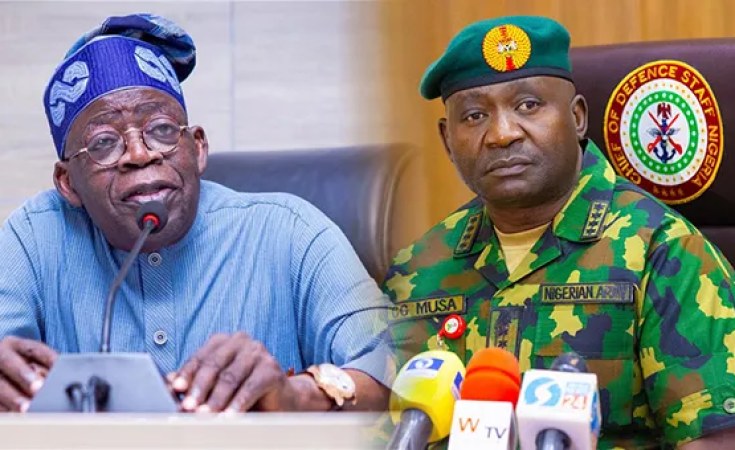
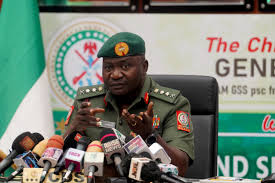
The Minister of Defence, General Christopher Gwabin Musa (retd), has said that education remains Nigeria’s most powerful tool in the fight against extremism, banditry, and terrorism, stressing that military force alone cannot solve the country’s security challenges.
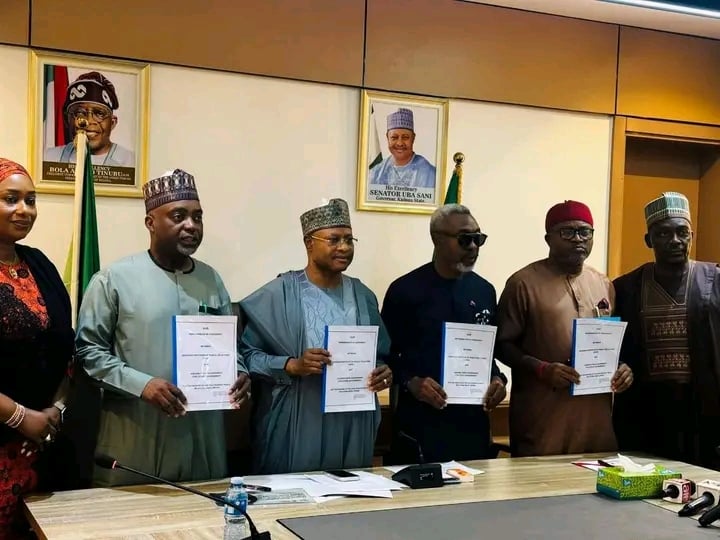
He made the remarks in Kaduna during the commissioning of the Kaduna Christian Academy, a school project supported by the Department of State Services (DSS) for the local community.
According to him, Nigeria is facing what he described as an asymmetric conflict, where armed groups do not rely only on weapons but also on radical ideas, misinformation, and influence over vulnerable communities.
He explained that the real solution goes beyond battlefield operations and must also focus on shaping minds through learning, discipline, and access to quality education.
“We are fighting an asymmetric war. The enemies of Nigeria use radicalisation and false narratives. Our best counter-weapon is the truth taught in a safe classroom,” he said.
The Defence Minister added that schools like the Kaduna Christian Academy represent more than just buildings for learning, describing them as long-term investments in national security and social stability.
He said that when children are educated in safe and stable environments, they are less likely to be influenced by extremist ideologies or recruited into criminal networks later in life.
According to him, education helps to build critical thinking, stronger values, and a sense of responsibility that reduces vulnerability to manipulation by violent groups.
“An educated population is less susceptible to the propaganda of terrorists and separatists,” he added.
Musa also noted that insecurity in Nigeria is closely linked to deeper social issues such as poverty, unemployment, and lack of access to opportunity, which often create conditions where extremist groups can recruit easily.
He stressed that lasting security cannot be achieved through military action alone, but through a combination of defence operations and long-term investment in human development.
The Defence Minister further described education as a “silent security asset”, saying that a classroom today can produce citizens who will reject crime, reject violence, and support peace in the future.
He also commended the DSS for supporting the construction of the school, describing it as an example of how security institutions can contribute beyond surveillance and enforcement by also investing in community development.
Traditional and religious leaders present at the event also supported the message, noting that education remains one of the strongest foundations for peace, unity, and national progress.
They added that when young people are given access to proper learning and moral guidance, communities become more stable and less vulnerable to violence.
Across Nigeria, insecurity has continued to affect several regions, with military operations ongoing against armed groups involved in banditry, kidnapping, and terrorism.
While security agencies have recorded some operational successes, challenges remain in fully addressing the causes and spread of violent crime.
For now, the Defence Minister’s message reinforces a growing national conversation that sees education not only as a development tool, but also as a key pillar in Nigeria’s long-term security strategy.
He maintained that building an educated society remains one of the surest ways to weaken extremist influence and strengthen national unity over time.