
Transport safety on Nigeria’s highways has long been a sensitive issue, especially around heavy-duty trucks that move goods across major industrial corridors.
In recent years, public concern over road crashes involving articulated vehicles has pushed regulators and private operators into tighter collaboration.
Now, the Federal Road Safety Corps is pointing to one of those partnerships as a success story.
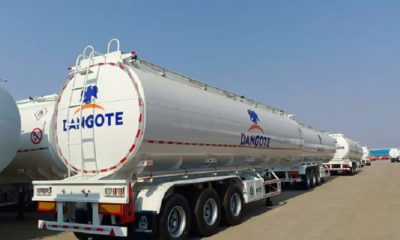
The FRSC has commended Dangote Cement Transport for introducing a new transport safety policy that has significantly reduced road crashes involving its truck fleet across the country.
The commendation was made during a visit by Dangote Cement officials to the FRSC headquarters in Abuja, where both sides reviewed performance data and ongoing safety reforms.
According to comparative figures shared during the engagement, crashes involving Dangote Cement trucks dropped by about 56 per cent between 2025 and 2026. Fatalities and injuries also recorded notable declines over the same period.
“These outcomes clearly demonstrate the strength of the internal safety reforms being implemented,” the Corps Marshal said, describing the company’s approach as a model for fleet operators.
The review also highlighted improvements linked to stricter speed control, better driver monitoring systems, and stronger enforcement of safety compliance within the company’s logistics operations.
Officials said the results were not accidental. They were tied to a structured “gap analysis” carried out by FRSC in 2025, which identified weaknesses in driver behaviour, rest management, vehicle inspection routines, and speed compliance systems.
Following that assessment, Dangote Cement reportedly introduced a series of reforms, including real-time tracking systems and automated monitoring tools designed to reduce risky driving patterns.
A senior transport official at the company said the reforms were part of a broader push to modernise operations.
“We are using technology to improve safety discipline and reduce human error on the road,” he said.
There is also a strong emphasis on continuous driver training and recertification, with periodic reviews intended to ensure compliance with national safety standards.
The FRSC, for its part, says the results show what is possible when regulators and private operators work closely rather than in isolation.
Officials believe the improvements could serve as a reference point for other logistics companies operating large fleets across Nigeria’s highways, where crash risks remain high due to traffic density, driver fatigue, and mechanical failures.
The Dangote Group has also publicly acknowledged the FRSC’s role in shaping its transport safety framework, describing the partnership as critical to achieving measurable improvements in road safety performance. (Peoples Gazette Nigeria)
Still, the broader road safety challenge in Nigeria remains complex.
Heavy-duty trucks continue to be involved in a significant number of road incidents nationwide, and safety experts often warn that improvements in one fleet do not automatically translate to systemic change across the sector.
The FRSC has repeatedly called for wider adoption of safety audits, driver retraining, and stricter enforcement of transport regulations across all commercial operators.
For now, however, the Dangote Cement case is being presented as a rare example of sustained improvement backed by data.
Whether it becomes a long-term model for the wider transport industry will depend on how consistently the reforms are maintained and how quickly other operators follow similar standards in the months ahead.