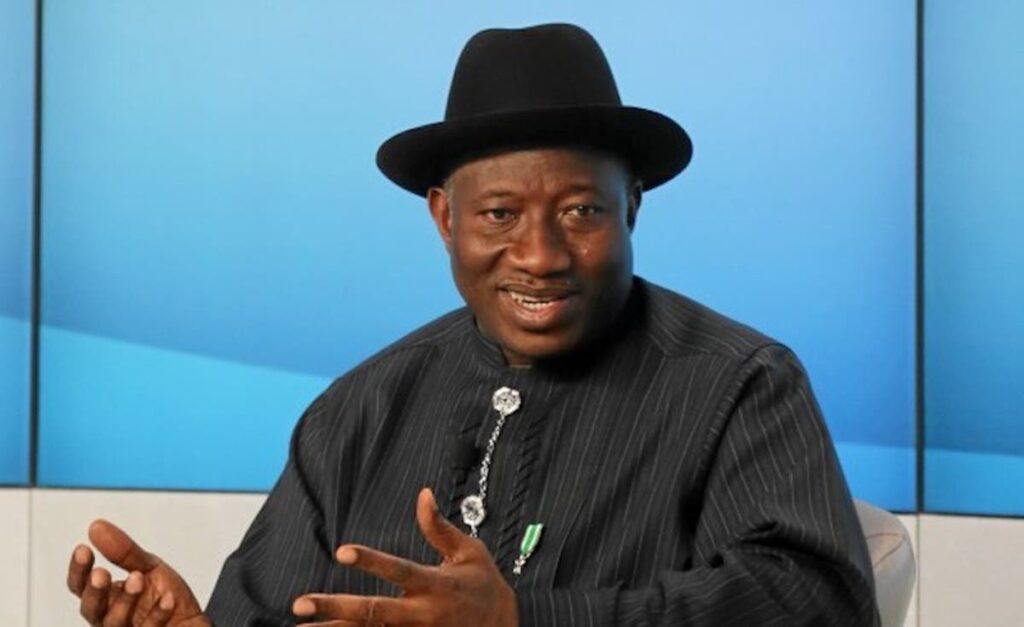
The long-running debate over Goodluck Jonathan’s political future has returned to the centre of Nigeria’s 2027 election conversations, after a Federal High Court ruling said the former president is eligible to contest again.
The decision adds a new twist to an argument that has followed Jonathan for years, especially as political actors, lawyers, and supporters continue to disagree over how constitutional provisions apply to his time in office.
The ruling, reported by Vanguard, comes amid renewed legal scrutiny around Section 137(3) of the 1999 Constitution, which some legal interpretations say restricts individuals who have completed another president’s tenure and later won election to only one additional term. Others argue the provision cannot be applied retrospectively to Jonathan’s circumstances.
Inside political circles, the issue has remained sensitive. Discussions around a possible Jonathan return have resurfaced repeatedly as opposition figures and coalition voices search for a candidate capable of reshaping the 2027 contest against President Bola Tinubu.
For supporters, the court’s position is being read as a major opening.
For critics, it is another stage in what they describe as an unresolved constitutional question that may still move through higher courts.
“The interpretation of eligibility remains a matter the courts must continue to settle,” a legal analyst familiar with the debate said.
Jonathan, who governed Nigeria from 2010 to 2015 after first completing the tenure of late President Umaru Musa Yar’Adua, has consistently avoided making firm declarations about a 2027 run, though he has repeatedly stated that he would consult widely before taking any political decision.
The latest court development is expected to intensify political pressure around him, especially within opposition blocs that see him as a stabilising figure with national reach.
Over the past year, discussions about his eligibility have shifted between legal arguments and political speculation. Some senior advocates have maintained that he remains constitutionally qualified to run, while others insist the 2017 constitutional amendment closes that door completely.
The court’s latest position, however, appears to strengthen the argument that his eligibility is still valid, at least at the level of current judicial interpretation.
Reactions have already begun to build within political circles, though official responses from major parties remain cautious. Legal observers say the matter is unlikely to end at the Federal High Court stage, given the national significance and the likelihood of appeals.
Public reaction has also been mixed. While some Nigerians see Jonathan’s potential return as a stabilising alternative in a tense political climate, others argue that the focus should remain on economic reforms and current governance challenges rather than revisiting past administrations.
The uncertainty surrounding the ruling also reflects a broader feature of Nigeria’s electoral landscape, where high-profile eligibility debates often run alongside early positioning for presidential contests.
For now, Jonathan remains a central figure in political speculation without confirming his next move.
What the court ruling has done is reopen a conversation that had begun to settle quietly, placing him once again at the centre of Nigeria’s unfolding 2027 political calculations, with legal interpretation and political ambition now moving on parallel tracks that may yet collide again in higher courts.