High-level gatherings in Abuja often move with a familiar rhythm, speeches layered over tributes, tributes layered over history, and history quietly sitting under the weight of present-day influence. The launch of former Head of State Yakubu Gowon’s autobiography followed that same pattern, though the financial figures attached to the event quickly became the dominant talking point.
Theophilus Danjuma, former Minister of Defence, and business magnate Aliko Dangote drew attention after pledging massive donations during the public presentation of Gowon’s autobiography, “My Life of Duty and Allegiance.” TheCable reported that Danjuma donated N3 billion, while Dangote contributed N500 million at the event held in Abuja.
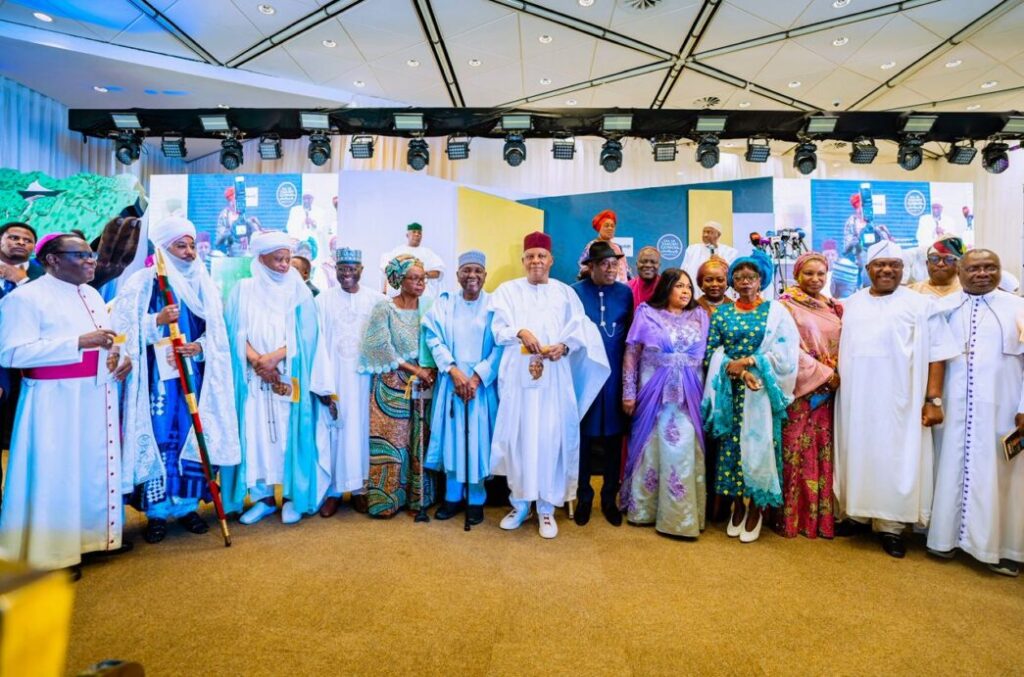
The ceremony attracted a wide circle of political and business elites, including senior government officials, diplomats, and military leaders. Vice President Kashim Shettima represented President Bola Tinubu at the unveiling, which also featured book reviews and tributes to Gowon’s leadership during one of Nigeria’s most sensitive historical periods.
Inside the hall, the atmosphere shifted between reflection and ceremony. Gowon’s memoir, spanning his years as military head of state between 1966 and 1975, was positioned as a historical record of decisions taken during the civil war and the post-war reconstruction era.
“He will forever be remembered as a leader whose love for his country was unwavering,” Danjuma said while reflecting on Gowon’s legacy, according to accounts from the event.
Danjuma’s contribution stood out not only for its size but also for how it was structured. Reports indicate that part of his donation was directed toward purchasing copies of the autobiography for distribution to universities that previously awarded Gowon honorary doctorate degrees.
Dangote’s support also came through the purchase of multiple copies of the book, adding another layer of financial backing to the launch. Other business leaders, including Abdul Samad Rabiu of BUA Group, also made contributions through book purchases during the ceremony.
“The event reflects respect for leadership and national service,” one of the organisers noted, describing the turnout and contributions as a show of institutional recognition rather than charity alone.
The scale of donations quickly became the most discussed element outside the venue, overshadowing even the content of the autobiography itself. Online reactions and commentary have since focused heavily on the recurring pattern of high-value contributions at elite Nigerian political and historical events.
Such gatherings have long blended legacy preservation with elite networking, where public presentations often double as platforms for symbolic financial gestures. In this case, Gowon’s memoir provided the backdrop for renewed attention on his role in Nigeria’s civil war era and the long-term narratives surrounding national unity.
Still, questions often follow these moments, particularly around the relationship between political history, business influence, and public displays of financial commitment. The event itself did not directly address those debates, remaining focused on tribute, remembrance, and historical framing.
For now, the autobiography launch stands as both a literary presentation and another reminder of how Nigeria’s political and business elite continue to intersect in moments that blend history with present-day influence.
What remains less clear is how much of this tradition is about preserving legacy, and how much of it is about shaping the narratives that follow it.