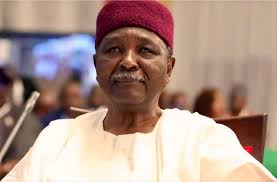
For many Nigerians, the phrase “Nigeria will not fall” is one of those lines that keeps returning whenever national tension rises. It is not new, not trendy, and not even particularly surprising anymore. But when it comes from General Yakubu Gowon, it carries a different weight, shaped by history, memory, and the long shadow of a country that once stood at the edge of fragmentation.
Gowon, Nigeria’s former Head of State during the civil war era, has once again reaffirmed his belief that the country will remain united despite its ongoing political and socio economic pressures. His comments were reported in a recent Vanguard publication, where he reflected on Nigeria’s stability and the responsibility of leaders to preserve national cohesion. (vanguardngr.com)
The remark did not come as a policy announcement or a structured speech. It surfaced more like a reminder, almost rehearsed, but still deeply rooted in his long standing position on national unity.
“Nigeria will not fall,” he insisted, repeating a line he has used in different forms over the years.
That statement immediately reconnects to his time in power between 1967 and 1970, a period defined by the Nigerian Civil War, one of the most painful chapters in the country’s history. Gowon’s leadership during that era has continued to shape how his public interventions are received today, especially when he speaks about unity and survival.
In his reflection, he emphasized that Nigeria has endured far more difficult periods in its history and still remained intact, suggesting that the current challenges, though serious, are not beyond the country’s capacity to withstand.
The context around his statement is important. Nigeria today is navigating multiple pressure points at once, from economic strain to security concerns and political disagreements that often spill into public debate. These tensions have made conversations about unity more frequent, and sometimes more emotional.
Yet Gowon’s message was not framed as alarm or reaction. It leaned more toward reassurance, the kind that comes from someone who has already seen the country at its most fragile point and believes it survived that moment for a reason.
“On my watch as Head of State, the country did not fall, and I am confident that despite all its challenges, Nigeria still will not fall,” he said in a related reflection.
That perspective reflects a consistent theme in his public life after leaving office. Gowon has often positioned unity not as a political slogan but as a lived experience of holding a diverse and divided country together through conflict and reconciliation.
Still, reactions to such statements in Nigeria are rarely uniform. For some, it is a comforting reminder from a leader associated with national survival during war. For others, it feels like a familiar phrase that does not fully address the complexity of present day realities.
The debate over Nigeria’s unity has never really disappeared. It shifts shape depending on political cycles, economic conditions, and regional tensions, but it remains a constant undercurrent in national discourse. Gowon’s remarks simply bring that conversation back into focus again.
His reference also indirectly points to the long standing principle that followed the civil war: “no victor, no vanquished.” That post war reconciliation approach remains one of the defining ideas of his legacy, even as discussions continue about how deeply it translated into long term national healing.
Younger Nigerians, many of whom did not experience the civil war era directly, often engage with these statements differently. For them, unity is less about historical memory and more about present day governance, opportunity, and economic stability. That generational gap continues to shape how such national messages are interpreted.
There is also the broader political environment, where calls for restructuring, better governance, and improved security often sit alongside renewed questions about national cohesion. In that space, statements like Gowon’s tend to echo beyond their immediate context, becoming part of a recurring national conversation.
For now, his position remains unchanged. Nigeria, in his view, has passed through its most dangerous phase and continues to exist as a united country despite its imperfections and ongoing struggles.
But whether that confidence fully matches how many citizens experience the country today remains a question that does not have a single answer.
And as Nigeria continues to wrestle with its identity, stability, and future direction, the phrase “Nigeria will not fall” will likely keep returning, not as a conclusion, but as a reminder that the debate itself is still unfinished.