In Osun State, security conversations have taken a more practical turn in recent months, shifting from policy discussions to visible assets on the ground. Patrol vehicles, motorcycles, and equipment are now becoming part of a growing pattern of local government involvement in security support.
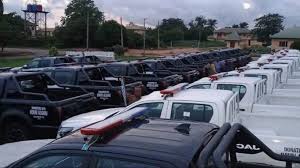
That shift became more visible again after the Association of Local Governments of Nigeria (ALGON) in Osun State handed over 30 operational vehicles to security agencies operating across the state. The donation was made during an official presentation in Osogbo, aimed at strengthening patrol capacity and improving response to security incidents.
The vehicles were distributed to multiple agencies, including the Nigeria Police Force, the Nigeria Security and Civil Defence Corps (NSCDC), the Federal Road Safety Corps (FRSC), and the Nigeria Immigration Service, among others. The idea, according to officials at the event, is to support mobility and reduce response time during emergencies.
It was not presented as a symbolic gesture alone. It was framed as a direct response to operational gaps that often slow down field response across communities.
“No society can thrive in an atmosphere of fear and insecurity,” the ALGON chairman said during the handover, stressing the link between safety and development.
The donation also comes at a time when local government autonomy is being widely referenced in Osun’s governance structure. ALGON officials linked the intervention to increased financial flexibility at the grassroots level, arguing that it allows councils to respond faster to security and development needs.
Interestingly, this is not an isolated intervention. Reports indicate that the association had earlier distributed hundreds of motorcycles to security agencies across the state as part of a broader logistics support plan.
The latest addition of 30 vehicles is therefore seen more as an extension of an ongoing security support strategy rather than a one-off contribution.
Security officials at the event welcomed the development, describing it as a practical boost to field operations. The Commissioner of Police in Osun State noted that improved mobility would strengthen surveillance, patrol coverage, and rapid response capacity, especially in areas that are harder to reach.
In practical terms, these vehicles are expected to be deployed for routine patrols, emergency response, and coordinated inter-agency operations. For security agencies that often operate with limited logistics, such support directly affects how quickly incidents are managed on the ground.
But beyond the formal speeches, the development also reflects a broader trend playing out across several Nigerian states, where sub-national governments and local bodies are becoming more involved in direct security logistics support.
Osun has been one of the more active examples in this direction, especially in recent months, with repeated donations of mobility tools and operational equipment to security institutions.
Still, the conversation around security in the state remains layered. While logistics support improves visibility and response capacity, structural challenges such as funding consistency, coordination between agencies, and broader national security pressures remain part of the wider picture.
For residents, however, the immediate impact is more straightforward. More vehicles on the road mean more patrol presence, at least in theory, and a stronger sense of deterrence in vulnerable areas.
There is also a political undertone that quietly runs through these interventions. Local government autonomy continues to be referenced as a key driver behind the ability of councils to fund and execute such projects, even as debates about governance structures and control persist at higher levels.
For now, ALGON’s latest move adds another layer to Osun’s evolving security architecture. It signals continued reliance on local interventions to supplement federal security structures, especially in logistics and mobility.
And as more equipment enters circulation, the real test will be how effectively these resources translate into safer communities over time, beyond the ceremony of handovers and announcements.