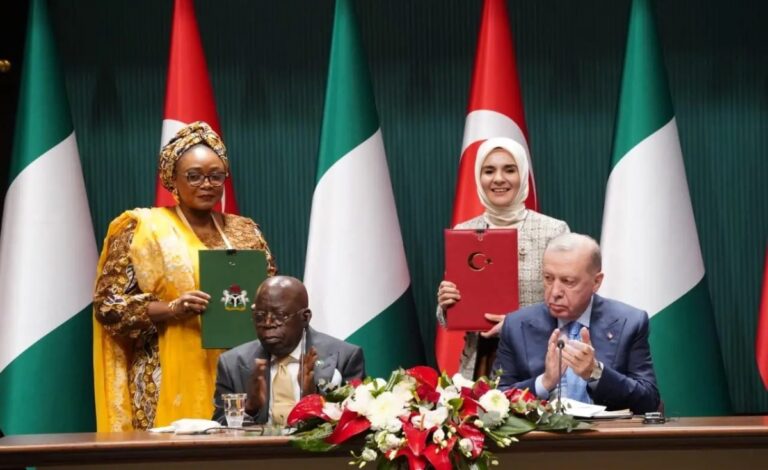
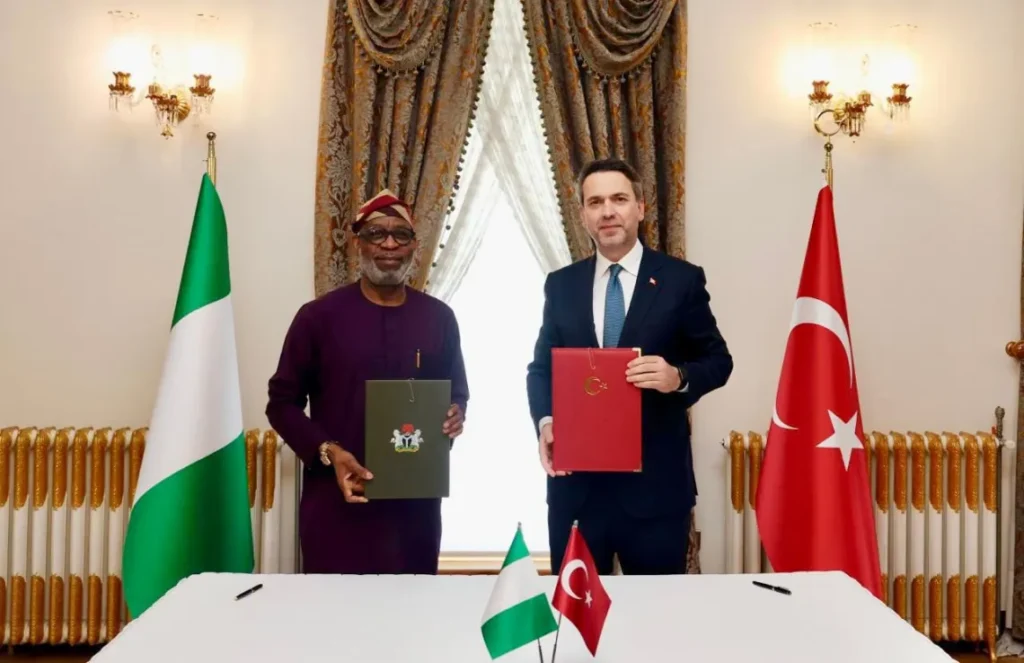
Nigeria’s push to reposition its solid minerals sector has continued to gain international backing, with fresh attention now turning to a new cooperation agreement signed with Türkiye during a high-level engagement between both countries.
The deal was formalised as part of efforts to deepen collaboration in mining development, technical expertise, and investment inflows into Nigeria’s underutilised mineral resources sector. According to officials, the agreement focuses on strengthening cooperation in mineral exploration, geological studies, mining technology, digital systems, and capacity building for industry stakeholders.
The signing took place between Nigeria’s Minister of Solid Minerals Development, Dele Alake, and Türkiye’s Minister of Energy and Natural Resources, Alparslan Bayraktar, on the sidelines of the 2nd Istanbul Natural Resources Summit.
For Nigeria, the agreement is being framed as part of a broader reform drive aimed at attracting serious investors into a sector long described as underdeveloped despite its vast resource potential.
Officials say the country has spent the past few years tightening regulation, improving transparency, and pushing against illegal mining activities that have historically weakened formal sector growth.
Türkiye, on its part, is positioning itself as a growing partner in Africa’s resource development landscape, focusing on technical cooperation and structured investment frameworks rather than direct resource control.
“This partnership opens the door to greater collaboration in mining technology, exploration, and capacity building,” a Nigerian official said during the engagement. The agreement also updates earlier cooperation efforts between both countries, building on a mining partnership first signed in 2021, now expanded into a more practical and results-driven framework.
In recent years, Nigeria’s mining sector has attracted renewed policy attention as the government attempts to diversify revenue sources away from oil dependency. Solid minerals such as gold, lithium, limestone, and iron ore have been identified as key areas for long-term investment growth.
The renewed agreement with Türkiye is expected to support this direction by improving access to modern mining technologies, strengthening geological data systems, and enhancing skills development within the sector.
Industry observers say the partnership reflects a broader shift in Africa’s resource strategy, where countries are increasingly seeking structured agreements that prioritise local capacity building and value addition rather than raw extraction alone.
“The focus is no longer just extraction, but how much value can be retained locally,” a mining sector analyst noted.
Türkiye’s growing involvement in Africa’s resource space is also being watched alongside other global players, particularly China, which remains dominant in large-scale mining investments across several African countries.
While China’s model is often characterised by heavy infrastructure-linked resource engagement, Türkiye’s approach has leaned more toward bilateral technical cooperation and medium-scale investment partnerships.
Nigeria’s latest agreement fits into that evolving pattern, with emphasis placed on knowledge transfer, exploration support, and regulatory strengthening rather than ownership-heavy arrangements.
However, implementation will be key. Previous agreements in the sector have often faced delays linked to funding gaps, bureaucratic bottlenecks, and infrastructure limitations that slow down project execution.
Still, government officials maintain that ongoing reforms are beginning to restore investor confidence, with increased interest from foreign partners in Nigeria’s mining value chain.
As the agreement takes shape, attention will likely shift toward how quickly planned technical collaborations translate into actual mining projects, job creation, and revenue generation.
For now, the deal signals a continued effort by Nigeria to open up its mining sector to structured international partnerships, while positioning solid minerals as a stronger pillar in its long-term economic diversification strategy.