
Few public servants in Nigeria have worked on business reform for as long as Dr. Jumoke Oduwole. She is a lawyer, a law lecturer and a policy practitioner, and she has spent more than a decade on the practical problems that hold businesses back: permits, tax processes, trade barriers and weak industrial policy. This post looks at her programs and initiatives, first as a reform official and now as Minister of Industry, Trade and Investment, and what they mean for companies and individuals.
Background: From Banking to Law to Government
She studied law at the University of Lagos, graduating in 1998, and was called to the Nigerian Bar the following year. Her early career was in investment and corporate banking, from 2000 to 2004 at FCMB Capital Markets and Guaranty Trust Bank. She later moved into academia and teaches international economic law at the Faculty of Law, University of Lagos. She has also held a Senior Fellowship at Harvard’s Kennedy School.
Phase One: Building the Ease of Doing Business Agenda (2015-2023)
She served in the Buhari administration from November 2015 to May 2023, first as Senior Special Assistant on Industry, Trade and Investment and later as Special Adviser on Ease of Doing Business. She was also the pioneer Secretary to the Presidential Enabling Business Environment Council (PEBEC).
Her own account of the starting point is candid: there was a big trust deficit between the private sector and government, so her team did fact-finding, engaged the private sector and looked at international best practice. When the work started in 2015, the World Bank ranked Nigeria 170th for ease of doing business.
The results she and her team reported include:
- Over 200 reforms. She and her PEBEC team delivered over 200 reforms that improved Nigeria’s business climate.
- A 39-place improvement. Nigeria moved up 39 places in the World Bank’s Doing Business rankings and was twice recognised as a top-ten reformer in three years.
- State-level replication. The PEBEC model has been replicated across most states, many with active ease-of-doing-business councils.
- A home-grown ranking. She championed domesticating the ranking, releasing Nigeria’s first indigenous ease of doing business report in 2021. Ranking states against each other gave governors a reason to compete on reforms.
- Financing tied to reform. A $750 million World Bank facility was secured for states that meet ease-of-doing-business requirements. businessday
Impact on individuals and small firms: Her reforms targeted what she called soft infrastructure, meaning processes and how government relates with the private sector. These are the registration, permit and tax steps that small business owners deal with daily. businessday
Building Trade Institutions
Beyond business registration, she helped shape Nigeria’s trade architecture. She played a key role in conceptualising and establishing the Nigerian Office for Trade Negotiations (NOTN), and served on the AfCFTA Implementation Committee and the Tax Policy Reform Committee. Her academic work focuses on international economic law, economic development in Africa, and the African Continental Free Trade Area.
Phase Two: Minister of Industry, Trade and Investment
As minister, she has moved from fixing the environment to driving production and exports. Her initiatives, several of them run jointly with Minister of State for Industry, Senator John Owan Enoh, include:
1. The Industrial Revolution Work Group (IRWG). This is an elite task force focused on a Nigerian industrial revolution plan for a larger innovation-driven economy, bringing in representatives from the Manufacturers Association of Nigeria, the organised private sector and other stakeholders.
2. National Industrial Tours. The ministry is embarking on tours across the six geo-political zones to assess Nigeria’s industrial landscape on the ground and fine-tune national industrial policies.
3. The Nigeria Industrial Policy (2025-2035). Officials describe it as Nigeria’s first comprehensive industrial policy since independence in 1960. After 90 days, implementation had commenced across all eight strategic objectives, and 2026 is the first full year of implementation. The policy is aligned with the Nigeria First agenda and focused on increasing local production, expanding exports, creating jobs and improving competitiveness.
4. Support for MSMEs. She reported that more than 115,000 micro, small and medium enterprises accessed grants, loans and trade finance through interventions delivered via the Bank of Industry, NEXIM Bank and the Nigerian Export Promotion Council. The ministry has also advanced plans for a ₦350 billion MSME Development Fund and financing arrangements for an MSME Industrial Clusters Programme.
5. Boosting local patronage and innovation. After touring NASENI, she said she had “seen 100 per cent Nigerian-made products,” a visit tied to the Nigeria First Policy.
6. Trade and investment promotion. The ministry says the theme of its 2026 national council meeting stressed deepening industrialisation, expanding exports, creating jobs and improving global competitiveness. It also reported that Nigeria secured the hosting right in 2025 for the UAE’s Investopia forum, making it the first African country to host it.
7. Intellectual property. In 2025, the ministry launched Nigeria’s first-ever National Intellectual Property Policy.
8. Accountability. At its 2026 retreat, ministry leaders signed a Strategic Performance Contract, which she said reflects a commitment to accountability and results-driven governance.
The Numbers Reported
Figures from ministry statements and her own briefings include:
- More than $24.1 billion in investment and more than $6.1 billion in non-oil exports attributed to implementation of the Renewed Hope Agenda.
- Over $500 million in export revenue generated in 2025, and more than 20,000 direct jobs created.
- An 11 percent increase in non-oil exports since 2024, over $6 billion in investment inflows, and more than $50 billion in investment announcements.
These are official, self-reported figures. Independent verification, and clarity on how “announcements” convert into real projects, would strengthen the case.
A Balanced Note
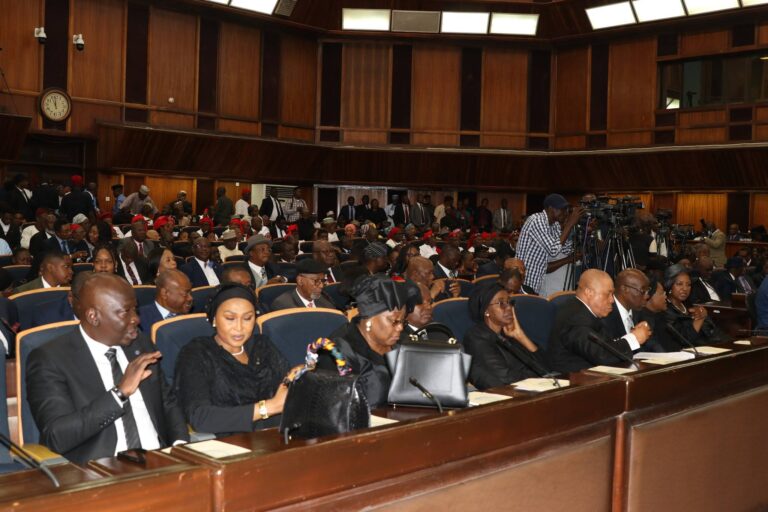
Her office faces real constraints. She told senators that the ministry’s proposed 2026 capital allocation of ₦2.72 billion was inadequate relative to its mandate. The scale of Nigeria’s industrial challenge also means results will take years to judge. Even so, she has built a track record of setting measurable targets and publishing reports against them.
Lessons from Her Approach
- Fix the basics first. Her reform work focused on everyday processes that affect every business.
- Consult the private sector. Trust-building and stakeholder task forces are central to her method.
- Use competition. Ranking states encouraged them to reform.
- Match policy with finance. Industrial policy needs funds, such as MSME facilities, behind it.
- Measure results. Performance contracts and public targets make progress visible.
Conclusion
From PEBEC’s early reforms to the Industrial Policy and MSME programs, Dr. Jumoke Oduwole’s career has centred on one idea: Nigerian businesses grow faster when the rules are clearer, the process is simpler and local production is supported. Her record offers lessons for policymakers and entrepreneurs, and the coming years will show how well the current programs deliver on their targets.