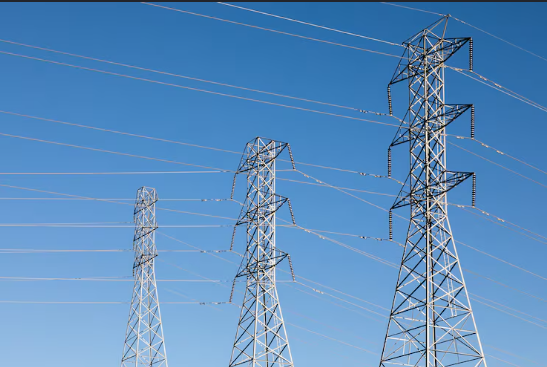
Electricity supply in many parts of Nigeria still depends on a fragile mix of national grid expansion and private solutions that struggle to scale fast enough.
In rural communities, the gap is even more visible. Homes and small businesses often rely on generators, while productive activities slow down whenever fuel prices rise or supply becomes unstable.
Against that backdrop, the Federal Government has introduced new guidelines designed to speed up the deployment of solar mini-grids across the country.
The guidelines focus on how mini-grids can be safely and efficiently connected to existing distribution networks, a step officials say is key to expanding electricity access in unserved and underserved areas.
They were developed by the Nigerian Electricity Management Services Agency, with technical support from development partners working in the energy sector.
At the launch in Abuja, officials described the framework as part of a wider push to modernise Nigeria’s electricity system and reduce long-standing barriers facing renewable energy investors.
“The guidelines provide comprehensive procedures, technical requirements and operational standards for integrating solar mini-grids without compromising safety and stability,” an official said during the event.
The new framework is designed to address a growing reality in Nigeria’s power sector. Mini-grids are no longer seen as small experimental systems. They are now becoming a central part of efforts to expand electricity access, especially in areas where extending the national grid is slow or costly.
Under the updated structure, developers are expected to operate under clearer technical rules covering interconnection, safety standards, and coordination with distribution companies.
There is also a stronger emphasis on investor confidence. Government officials say uncertainty around approvals and grid compatibility has slowed down projects in the past, even where demand for electricity is high.
The new guidelines aim to reduce those delays by providing clearer expectations for all parties involved.
Solar mini-grids have been positioned as a practical solution for communities that remain outside reliable grid coverage. They allow local generation and distribution of electricity, often powered by solar systems combined with battery storage.
In many cases, these systems support schools, clinics, small factories, and trading clusters that depend heavily on stable electricity to function.
“We are trying to remove friction in the system so that electricity access can expand faster and more safely,” another official said.
The policy shift also aligns with broader regulatory reforms in Nigeria’s electricity sector, including updated mini-grid regulations that expand capacity thresholds and simplify licensing processes for developers. (nerc.gov.ng)
Energy experts say the combined reforms reflect a stronger push toward decentralised power systems, where smaller renewable projects play a bigger role alongside traditional grid infrastructure.
Still, implementation remains the key question.
Nigeria’s power sector has seen multiple policy changes over the years, but real impact often depends on how quickly guidelines are translated into active projects on the ground.
For mini-grid developers, issues such as financing, equipment costs, and coordination with distribution companies still shape how fast projects can scale.
Communities also remain a central factor. Many mini-grid projects rely on local agreements, tariff negotiations, and sustained maintenance to remain viable beyond installation.
Even so, the government is betting that clearer rules will attract more investment and speed up electrification in areas that have waited years for stable power.
For now, attention shifts from policy announcements to execution.
The real test will be whether these new guidelines can move mini-grids from isolated projects into a connected system that delivers consistent electricity to the communities that need it most.