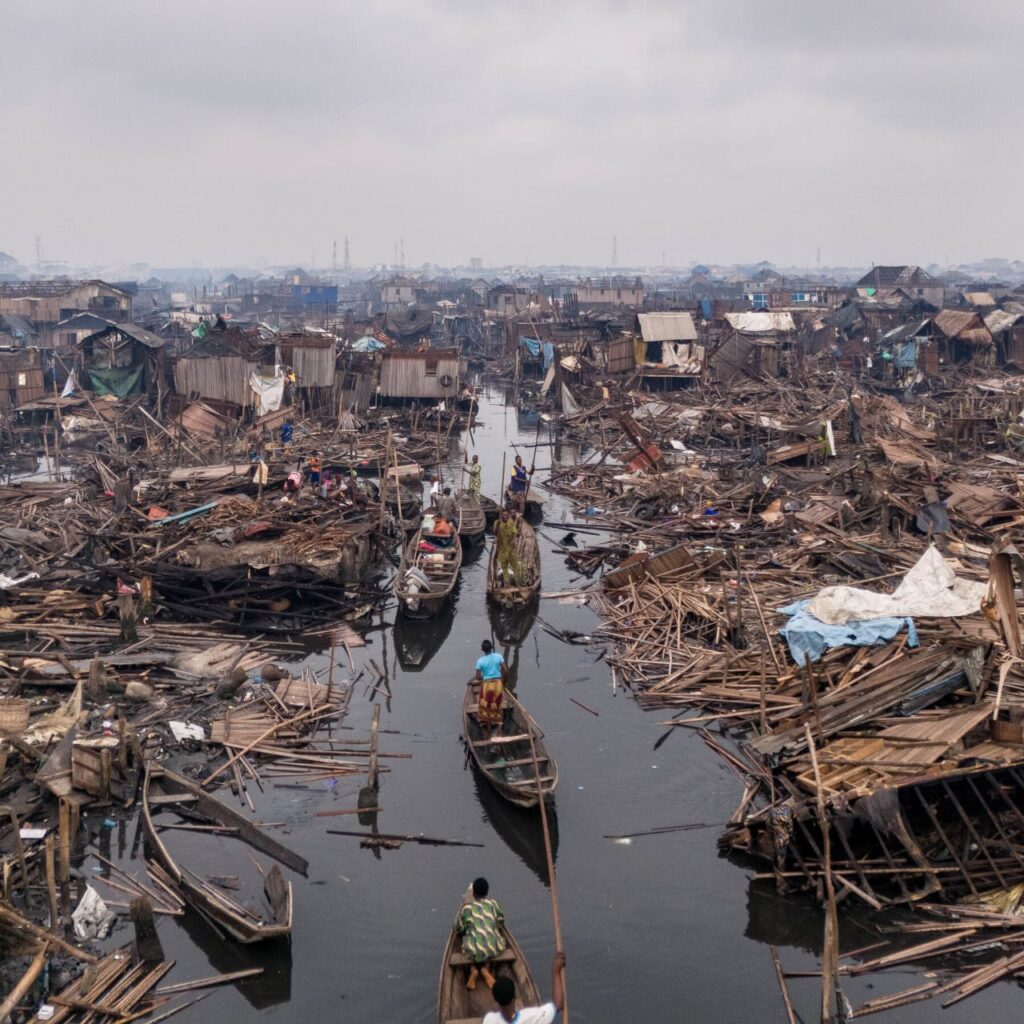
Controversy in Lagos — Historic Makoko Riverine Faces Demolition, Outrage and Human Toll
Lagos, Nigeria — The long‑standing riverine community of Makoko — often referred to as the “Venice of Africa” — is at the centre of a national controversy as Lagos State authorities continue a widespread demolition campaign that has displaced thousands, ignited protests, and drawn sharp criticism from residents, civil society organisations and human rights defenders.
Mass Demolition and Displacement
Since late December 2025, Lagos State’s demolition operation has led to the destruction of over 3,000 homes in Makoko, displacing more than 10,000 residents, including families with young children who have been left seeking shelter in boats, canoes, churches and open spaces around the Lagos Lagoon.
A widely reported case involves a couple and their 5‑month‑old twins now living in a canoe after their stilt house — home for years — was bulldozed.
Government Rationale and Official Position
The Lagos State Government, led by Governor Babajide Sanwo‑Olu, has defended the demolitions, saying they are aimed at protecting lives and property by removing unsafe structures — particularly those near high‑tension power lines and congested waterways. Officials maintain the exercise forms part of broader efforts to enhance safety and urban planning for Nigeria’s largest city.
Independent Newspaper Nigeria
The governor has also announced plans for palliatives and support measures, though critics argue these are insufficient and not yet clear in scope.
Punch Newspapers
Resident Outrage and Rights Groups’ Response
Residents, community leaders and civil society organisations have strongly condemned the demolition campaign as forced and unjust, alleging violations of legal protections and human rights standards. Community activists and civil society groups say the state has exceeded its stated demolition boundaries, extended operations far beyond initial agreements, and gone ahead with little to no adequate warning, consultation, resettlement or compensation for affected families.
Human rights groups report that the demolition has already resulted in injuries and deaths — including children and elderly residents — and that critical community structures such as schools, clinics and places of worship have been lost.
Protests and Police Response
Across Lagos, residents and activists have taken to the streets to protest the demolitions, calling on the state government to pause the operations and engage meaningfully with the community. On January 28, 2026, police fired tear gas to disperse protesters near the Lagos State House of Assembly, leaving at least one demonstrator injured, according to reports.
Reuters
Cultural and Human Impact
Makoko is not just a settlement — it is a historic waterfront community with deep cultural roots, where generations of fisherfolk, traders and families have lived and worked in a unique lagoon environment. Critics of the demolitions argue that the loss of homes and community life represents a major human cost, undermining livelihoods and deepening poverty among some of Lagos’ most vulnerable residents.
The Sun
Activists have described the situation as a failure of leadership, arguing that true development must be people‑centred, humane and inclusive — not simply about removing communities to make way for high‑end real estate or urban branding.
Why This Matters to Nigeria
Human Rights at Stake: Forced evictions without proper resettlement plans raise serious constitutional and international legal concerns.
Urbanisation vs. Humanity: Lagos’ rapid growth has exacerbated housing shortages and highlighted systemic gaps in housing policy and social planning.
Cultural Identity and Heritage Loss: The demolition of parts of Makoko threatens not just homes — but a way of life and a heritage landmark that has endured for generations.
Arise Naija Insight:
The unfolding Makoko situation reflects a broader challenge facing Nigeria’s megacities — balancing urban development ambitions with human dignity, cultural heritage, and social inclusion. As Lagos moves forward, the need for equitable housing solutions and genuine stakeholder engagement has never been clearer.